
Most teams want more deep work, but few offices are actually designed to support it.
Even with productivity hacks, calendar tools, and focus apps, employees still end up fighting a constant stream of interruptions. Side conversations, quick questions, coffee machines, and the general hum of an open-plan space.
It’s like trying to swim upstream in a waterfall of distractions: no matter how hard people try, the environment keeps pulling their attention away.
Deep work doesn’t happen by accident; it happens when our physical space makes sustained focus possible.
Why Is Deep Work So Elusive?
Deep work requires long stretches of uninterrupted focus, something most offices simply aren’t designed to protect. As Cal Newport describes, deep work is the ability to concentrate fully on demanding tasks like writing, planning, coding, or problem-solving. But modern workplaces are built around shallow work: quick chats, constant notifications, rapid responses, and reactive tasks that fragment attention.
It’s the difference between replying to 50 Slack messages and actually writing the strategy document your team needs. In environments where noise, movement, and interruptions are the norm, the brain never gets the internal quiet or sustained time it needs to enter a deep work state, which is why true focus is so rare in most offices.
Why Offices Aren’t Designed for It
When offices aren’t built to support deep focus, teams spend most of their day in a distracted, reactive mode. Busy, but not moving meaningful work forward.
Open-plan layouts that place sales calls beside strategy writing, ambient noise from printers and air conditioning systems all chip away at people’s ability to concentrate. Even small interruptions, like a tap on the shoulder or a passing conversation, can reset someone’s attention and cost them minutes of productivity each time.
Neurodiverse employees feel this strain even more, often without a reliable way to self-regulate. Over time, the result is slower progress, more cognitive fatigue, and teams working harder than ever while achieving less depth and clarity in their work.
What Actually Helps with Deep Work
You don’t need a monastery to focus, but you do need conditions that respect your brain’s limits.
Here are four pillars that support sustainable deep work:
Environment: Make Focus Feel Natural
Your brain constantly scans for context: Is this a place to relax? Perform? Focus?
If your space is overstimulating, your nervous system is already on the back foot. But when your environment supports you, focus feels natural, not forced.
-
Sound-absorbing materials (like felt panels) reduce mental fatigue
-
Warm, soft lighting supports attention spans and eases strain
-
Tidy desks reduce visual clutter and help you shift into intentional work
-
Pods, booths, or tucked-away corners create pockets of quiet
Boundaries: Protect What Matters
Focus isn’t just about what you do. It’s about what you block out.
In a world of constant pings, tabs, and Slack notifications, boundaries are essential and often self-made.
-
Put phones away. Even a silent phone on your desk drains focus
-
Use distraction blockers
-
Schedule deep work in your calendar like a meeting. Protected and non-negotiable
Habits: Work With Your Brain, Not Against It
It’s not about pushing harder, it’s about working with your natural rhythm.
-
Do deep work in your clearest window, often 2–3 hours after waking
-
Save admin, calls, and meetings for lower-energy times
-
Try Pomodoro sprints, focused bursts with breaks support sustained attention
-
Foggy? Step away. Fatigue leads to sloppy thinking, and the need to rework later
Rituals: Train Your Brain Into Deep Work
Rituals signal transition from distraction to focus.
-
Make tea or coffee. The sensory cue can become your “start” trigger
-
Take a deep breath, stretch, or slip on noise-cancelling headphones
-
Even something small, like putting on a hoodie, can help shift gears
It’s Time to Rethink the Office
Silent Pods fit naturally into this picture because they give people an immediate, interruption-free place to focus without needing to rebuild the office around them.
When the main workspace is busy or overstimulating, our soundproof office booths offers a quiet, predictable environment where someone can step away, reset, and dive into deep work without fatigue creeping in.
It’s a small, flexible addition that supports clarity and calm, especially helpful as more teams return to shared spaces and need somewhere to unplug from noise.
Rather than redesigning entire floors, pods create the right conditions for meaningful work to happen, whenever people need it.
The Silent Pod Range: Simple Spaces That Make Deep Work Possible
Silent Pods offer a practical way to create focus-friendly environments without renovating your office. Each pod reduces everyday noise to a comfortable level and gives employees a dedicated place to think, plan, or reset, whether they’re on campus, in a hybrid setup, or in a busy open-plan space.

Single Pod — Quiet Focus for One
Single Pod
Ideal for moments when deep work requires total concentration. The Single Pod gives one person a calm, uninterrupted space to write, plan, or problem-solve, even in the noisiest parts of the office.
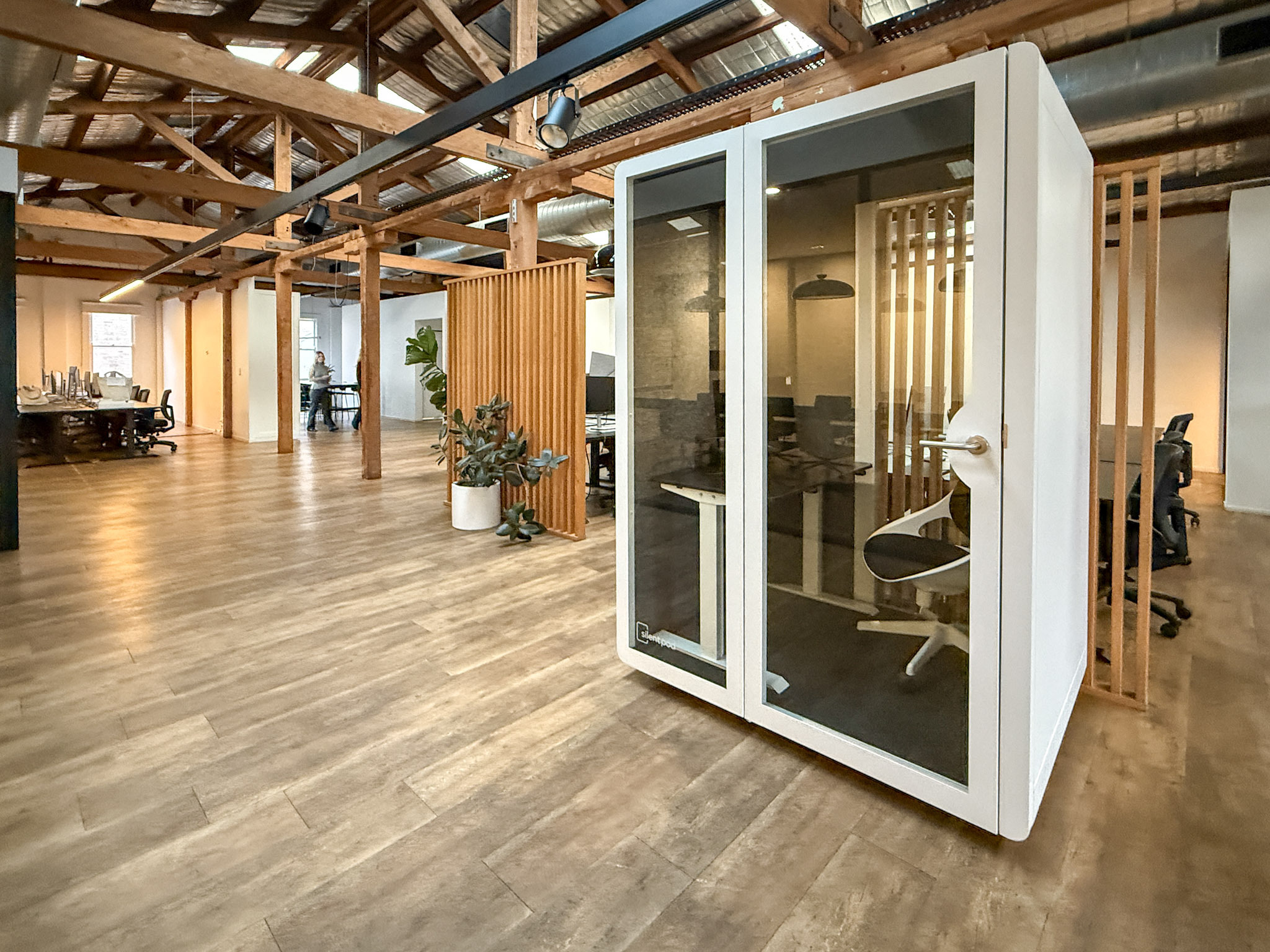
Connect Pod — More Room for Individual Work
Connect Pod
The Connect Pod offers a larger, private environment for people who prefer more breathing space while working. It’s helpful for longer deep-work sessions, virtual meetings, or tasks that require sustained attention without external noise.
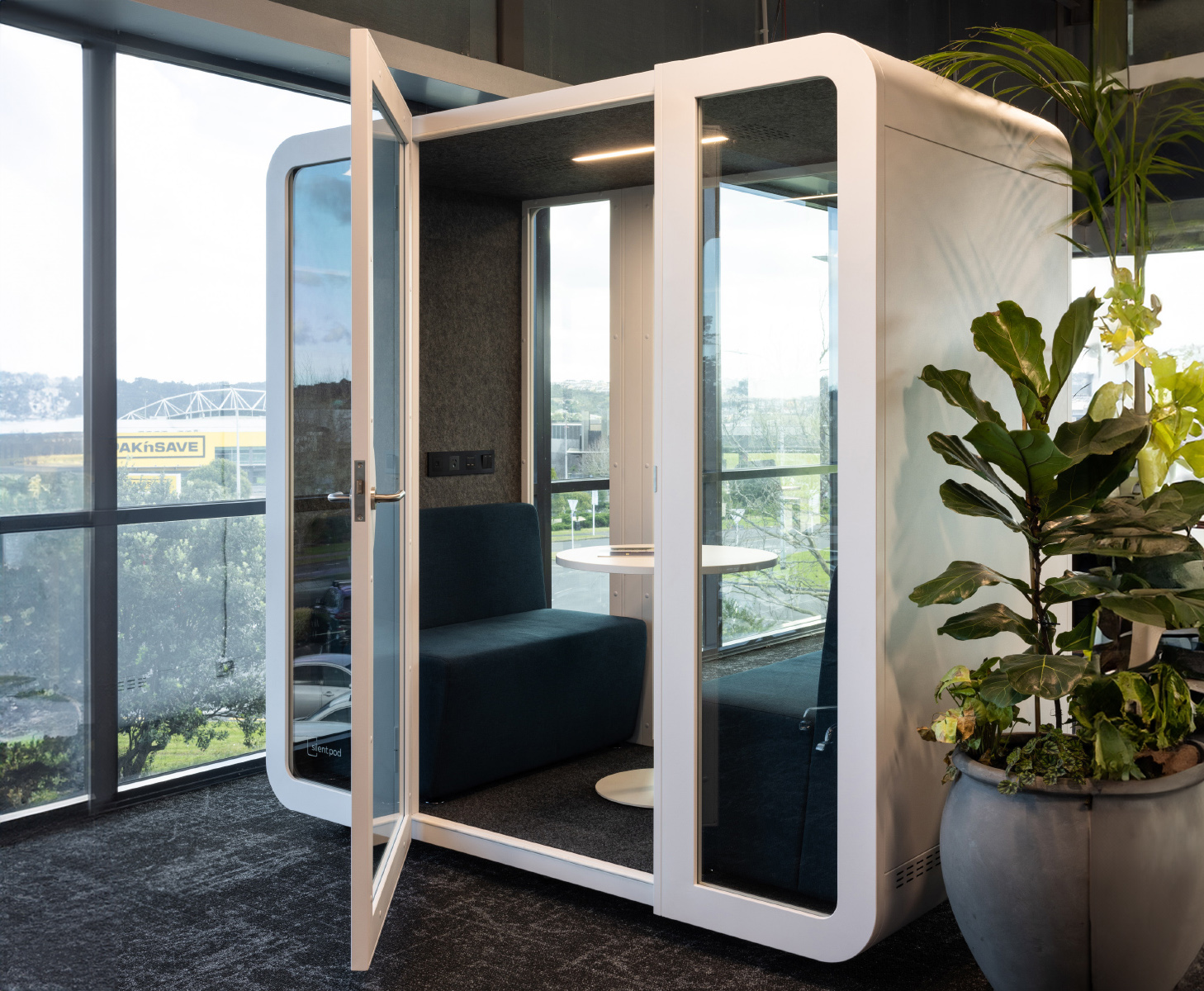
Collab Pod — Small-Group Focus for 2–4 People
Collab Pod
When teams need to brainstorm or workshop ideas without constant distractions, the Collab Pod provides a contained, low-noise space that keeps the conversation grounded and productive – perfect for campuses and hybrid teams.
Boardroom Pod — Focused Meetings for 5–6 People
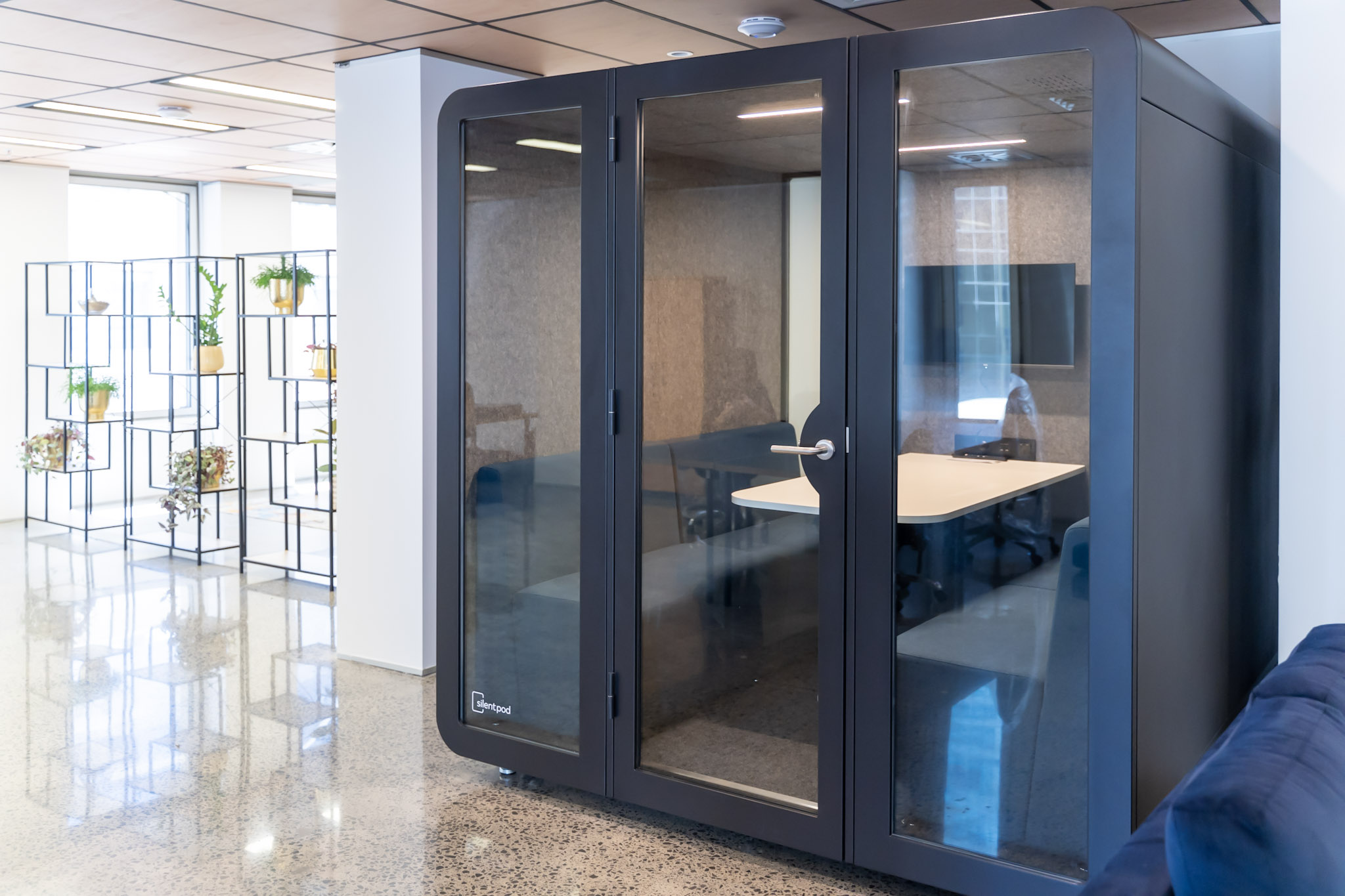
Boardroom Pod
With space for a monitor and a small team, the Boardroom Pod creates a meeting environment where ideas stay crisp and uninterrupted. It’s especially useful for project planning, strategy discussions, or group work that benefits from clarity and reduced external noise.
Across the range, each pod offers the same core benefit: a simple, flexible way to give your team the quiet, focused conditions deep work truly needs, without redesigning your entire office.
Ready to Support Deep Work in Your Workplace?
SilentPod is a simple, scalable way to bring focus-friendly design into your office. Explore how it works, and why more teams are choosing silence as a tool for better work.
See how teams are using SilentPods in their spaces
